

By the end of August, China's export container freight rate index had reached 3079 points, an increase of 240.1% over the same period in 2020, more than double the historical peak of 1336 points before this round of increase.
This round of price increases covers a wider range. Before 2020, the freight rate rise in the container market was mainly concentrated on some routes and some periods, while the current round generally rose. The freight rates of major routes such as the European line, the US line, Japan South Korea line, Southeast Asia line and Mediterranean line increased by 410.5%, 198.2%, 39.1%, 89.7% and 396.7% respectively compared with the end of 2019.
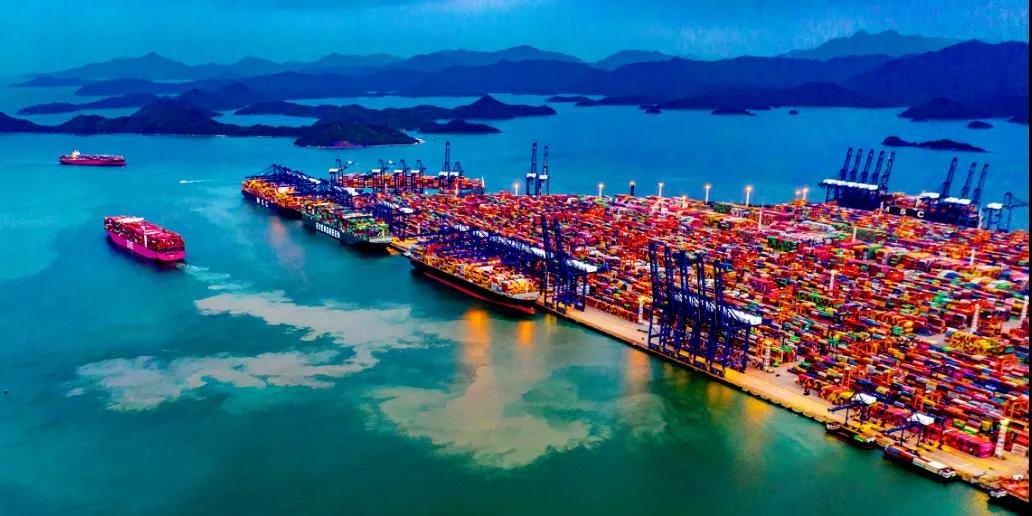
On October 17, the busy Yantian port operation terminal in Shenzhen. Photo by Wang Meiyan (Zhongjing vision)
Freight rate rise "unprecedented"
Jia Dashan, vice president of the Water Transportation Research Institute of the Ministry of transport, who has been engaged in industry research for many years, also lamented "unprecedented" the popularity of this round of international container transportation market.
Jia Dashan said that in terms of demand, since this year, the global economy has continued to recover, and international trade has rapidly resumed growth. Compared with the same period in 2019, the demand for container transportation has increased by about 6%. China's situation is better. From June 2020, production, manufacturing and foreign trade exports have achieved continuous growth.
From the perspective of supply, the operation efficiency of ships affected by the epidemic has decreased significantly. Countries have strengthened the prevention and control of Port imported epidemic, extended the berthing time of ships in the port and reduced the turnover efficiency of container supply chain. The average stopping time of ships in port increased by about 2 days, and that of ships in North American ports exceeded 8 days. The decline in turnover has broken the original balance, and about 10% of the supply is insufficient compared with the basic balance of supply and demand in 2019.
The continuous shortage of crew supply has also increased the shortage of supply. The complex epidemic situation in large seafarer countries such as the Philippines and India, coupled with crew shift change and isolation, has led to the continuous rise of crew costs in the maritime market.
Disturbed by the above factors, the normal relationship between market supply and demand quickly reversed, and container liner freight rates continued to rise sharply.
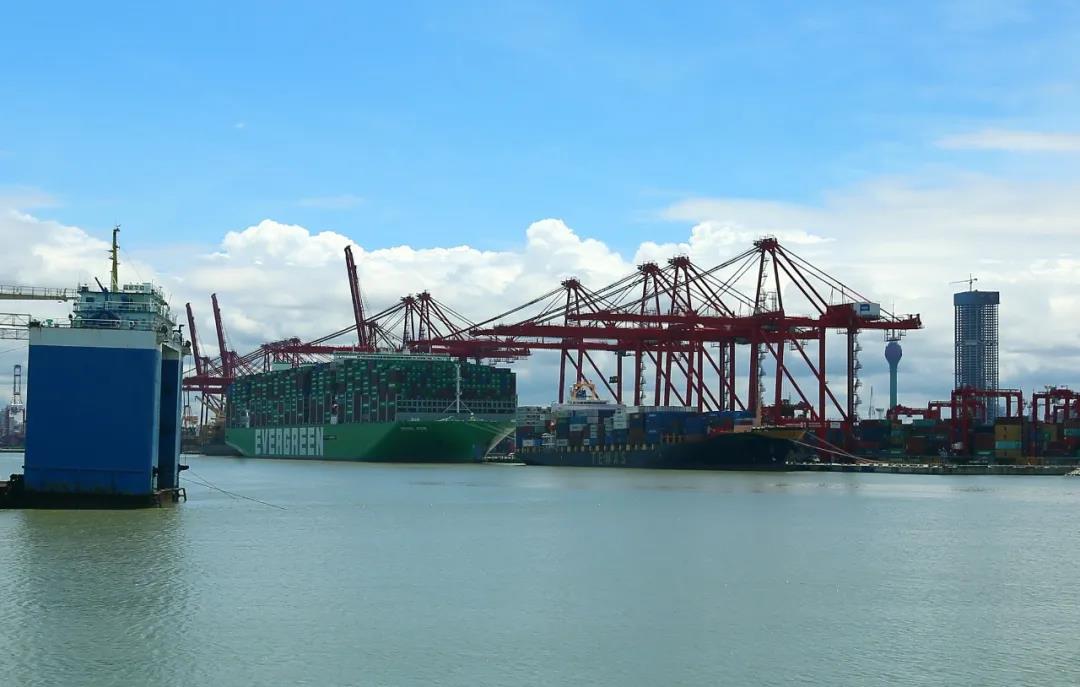 On October 6, "changfan", one of the world's largest container ships, docked at Colombo international container terminal for unloading. Photo by Ajit Pereira (Xinhua News Agency)
According to the statistics of UNCTAD, China Customs and ports, from before the outbreak to July this year, more than 80% of the goods in Global trade were completed by sea, while the proportion of China's foreign trade import and export goods completed by sea increased from 94.3% before the outbreak to 94.8% at present.
"According to relevant research, in China's import and export trade of goods, the proportion of goods with transportation rights controlled by domestic enterprises is less than 30%. These enterprises will be directly affected by price fluctuations, and most other enterprises are not affected by freight price fluctuations in theory." Jia Dashan analyzed. In other words, the cost increase caused by the rise in freight rates will first be directly transferred to foreign purchasers, and Chinese enterprises will be less directly affected.
However, as an important cost of commodities, the rise of freight rates will inevitably have a great impact on Chinese enterprises, mainly reflected in the decline of transportation services. Due to the decline of the scheduled flight rate and the shortage of shipping space, the trade circulation of China's export processing enterprises is not smooth. Even if the orders can be produced smoothly, the delivery will be affected due to the poor transportation, and then the order execution and production arrangement of enterprises will be affected.
"Small and medium-sized enterprises will be more affected." Jia Dashan believes that due to the lack of guarantee of long-term Association contract, small and medium-sized enterprises mainly seek transportation services in the spot market. Subject to the bargaining power and transportation capacity guarantee, they are facing the dilemma of "one box and one cabin" in the current process of freight rate rise. In addition, the port and inland transportation organization departments at the land end will also add additional cargo demurrage and storage costs due to the rise of freight rates and the decline of flight punctuality.
Improving transport capacity is difficult to cure
According to the data of shipping market research institutions, the idle capacity of global container ships has decreased to less than 1%. Except for the ships that must be repaired, basically all the capacity has been put into the market. Many shipowners began to increase the scale of custom-made transportation capacity, but it was far from enough. The shipowner reflected that the transportation capacity was still tight and it was difficult to find first hold.
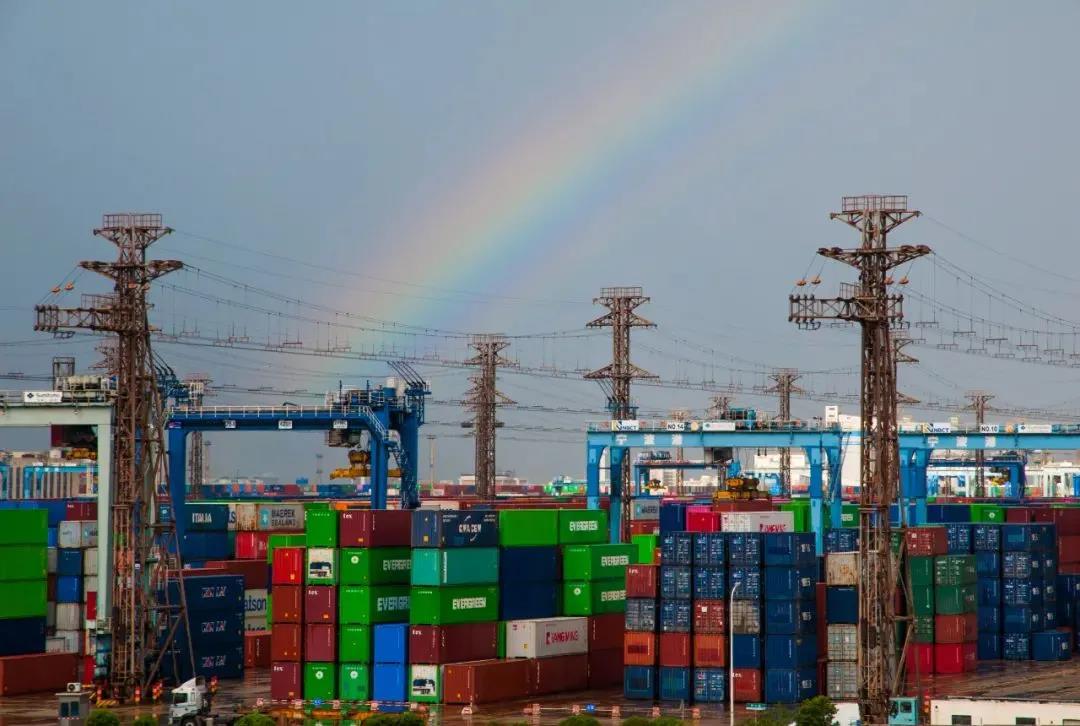
On October 9, the container terminal in Beilun port area of Zhoushan port, Ningbo, Zhejiang Province. Photo by Jiang Xiaodong (Zhongjing vision)
Zhu Pengzhou, a staff member of Shanghai Shipping Exchange, said that the reason why the supply chain is called a chain is that the upper capacity limit of the whole chain is usually affected by the short board effect. For example, the reduced efficiency of the wharf, the shortage of truck drivers and the insufficient unloading and return speed of the factory will form constraints. Simply increasing the shipping capacity of liner companies can not improve the overall transport capacity of the logistics chain.
Jia Dashan agrees with this. In terms of demand, compared with the same period in 2019, the demand for container transportation increased by about 6%. In terms of transportation capacity, the transportation capacity increased by about 7.5% in the same period. It can be seen that the mismatch between supply and demand is not due to insufficient transport capacity. The main reasons are the unbalanced increase of freight demand, poor collection and distribution, port congestion and the decline of ship operation efficiency caused by the epidemic.
For this reason, shipowners are still very cautious about investing in shipbuilding. By August 2021, the proportion of order capacity in the existing fleet will rise to 21.3%, far lower than the level of 60% at the last shipping peak in 2007. Even if these ships are put into use before 2024, the relationship between transport capacity and volume will basically remain unchanged under the background of an average annual growth of 3% and an average annual dismantling of 3%, and the market will continue to maintain a high freight rate level.
When will the "difficult to find first class" be relieved
Soaring freight rates are not only unfavorable to trading enterprises, but also bring huge risks and uncertainties to shipping enterprises in the long run.
International shipping giant Dafei has made it clear that it will stop the freight rate rise in the spot market from September this year to February 2022. Herbert also stated that it had taken measures to freeze the rise in freight rates.
"It is expected that the end of 2021 will usher in the inflection point of the market freight peak. At that time, the freight will gradually enter the callback space. Of course, the uncertain impact of emergencies cannot be ruled out," said Zhang Yongfeng, chief consultant of Shanghai International Shipping Research Center and director of International Shipping Research Institute.
"Even if the supply-demand relationship is fully restored to the level of 2019, it is difficult for the freight rate to return to the level from 2016 to 2019 due to the rise of various factor costs," Jia Dashan said.
Considering the current high freight rate, more and more shippers are inclined to sign long-term agreement contracts to lock the freight rate, and the proportion of long-term agreements in the market is gradually increasing.
Government departments are also making active efforts. It is understood that the Ministry of transport, the Ministry of Commerce and other relevant departments have implemented active promotion policies in many aspects, such as expanding container production, guiding liner companies to expand transport capacity and improving logistics service efficiency, so as to ensure the stability of the international industrial chain and supply chain.
Source: Qi Hui, reporter of economic daily
In this article, except for the pictures indicating the source, the rest are from online public channels, and their source cannot be identified. If there is a copyright dispute, please contact our company.